Anza · 5 km north of Agadir · Atlantic
Anza beach — the break we coach at most, honestly rated.
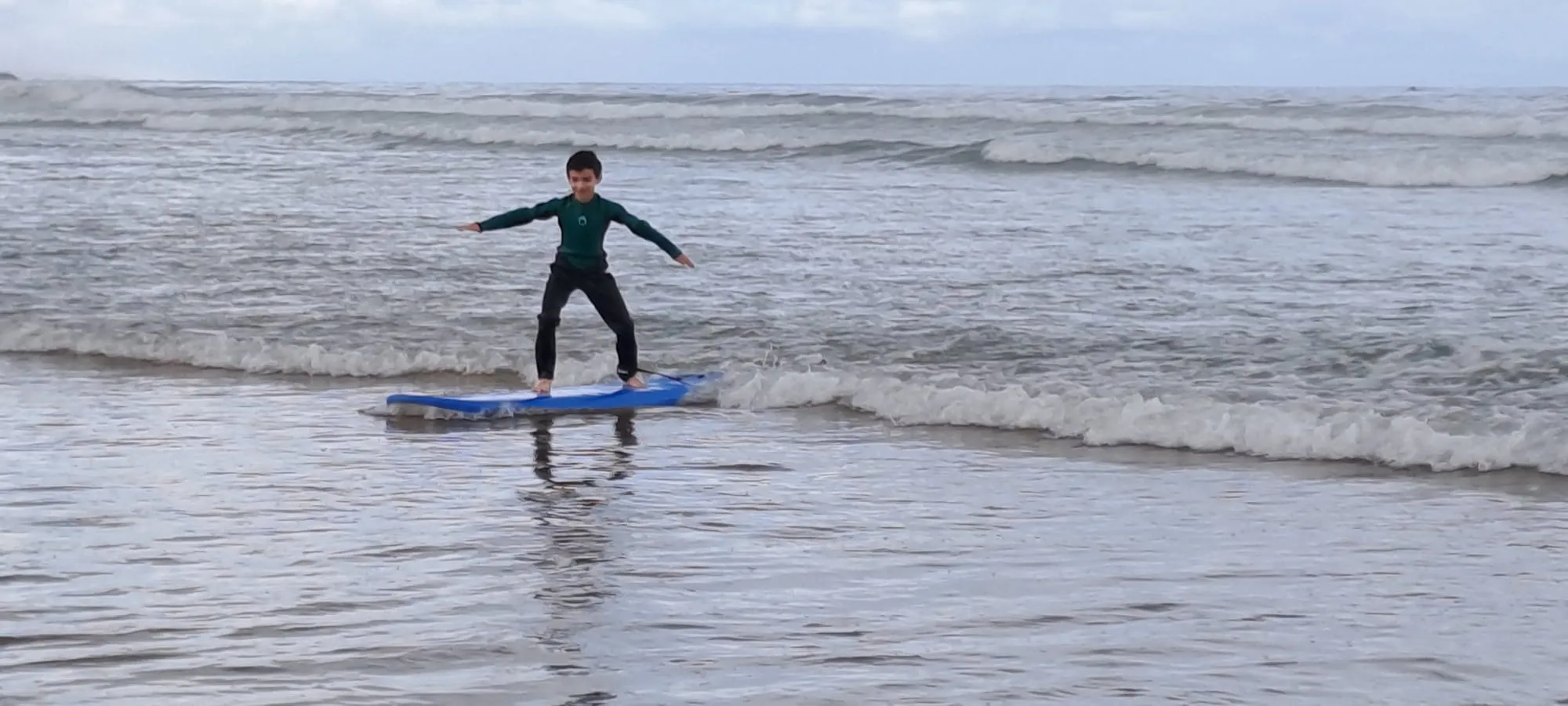
Anza works for every level on the right tide: soft sand sections in the middle for first stand-ups, a faster reef shoulder on the north side for surfers already catching green waves. Five kilometres from central Agadir, it is our default coaching break.
Field notes below come from coaching at Anza most weeks since 2019 — tide windows, hazards, and when we take beginners elsewhere.
“Anza is the honest middle ground of the Agadir coast — real waves without the crowds or reef pressure of the famous points. On a rising tide with a clean 1 m swell, it is the best learning wave in the region.”
Simo · Lead coach
Tide windows
When Anza actually works
More than swell size, tide decides whether Anza is forgiving or spicy. Cross-check with a live forecast — wind matters too.
| Tide | Suits | What changes |
|---|---|---|
| Mid to high | Beginners | Rising tide covers the reef and softens the waves — the window we coach first-timers in. |
| Low | Confident intermediates | Low tide exposes the reef flank on the north side and speeds up the shoulder. Know where the rocks are before this window. |
| All tides (main peak) | Experienced locals | The main sand peak works across most tides when swell is moderate. Expect a busy weekend lineup. |
Hazards & risks
What can go wrong — read this before paddling out alone
Sea urchins on the reef
The north-side reef holds sea urchins when the tide drops. A paddle-out over the rocks at low tide is where most visitors learn this the hard way.
Current by the harbour
On bigger days a current builds around the river mouth and harbour side. It is manageable with a coach reading it; less so alone.
Busy weekend lineup
The main peak fills up on weekends. Arrive early, respect the rotation, or book a coached session and skip the etiquette guessing.
Level suitability
Who should surf Anza — and who shouldn't
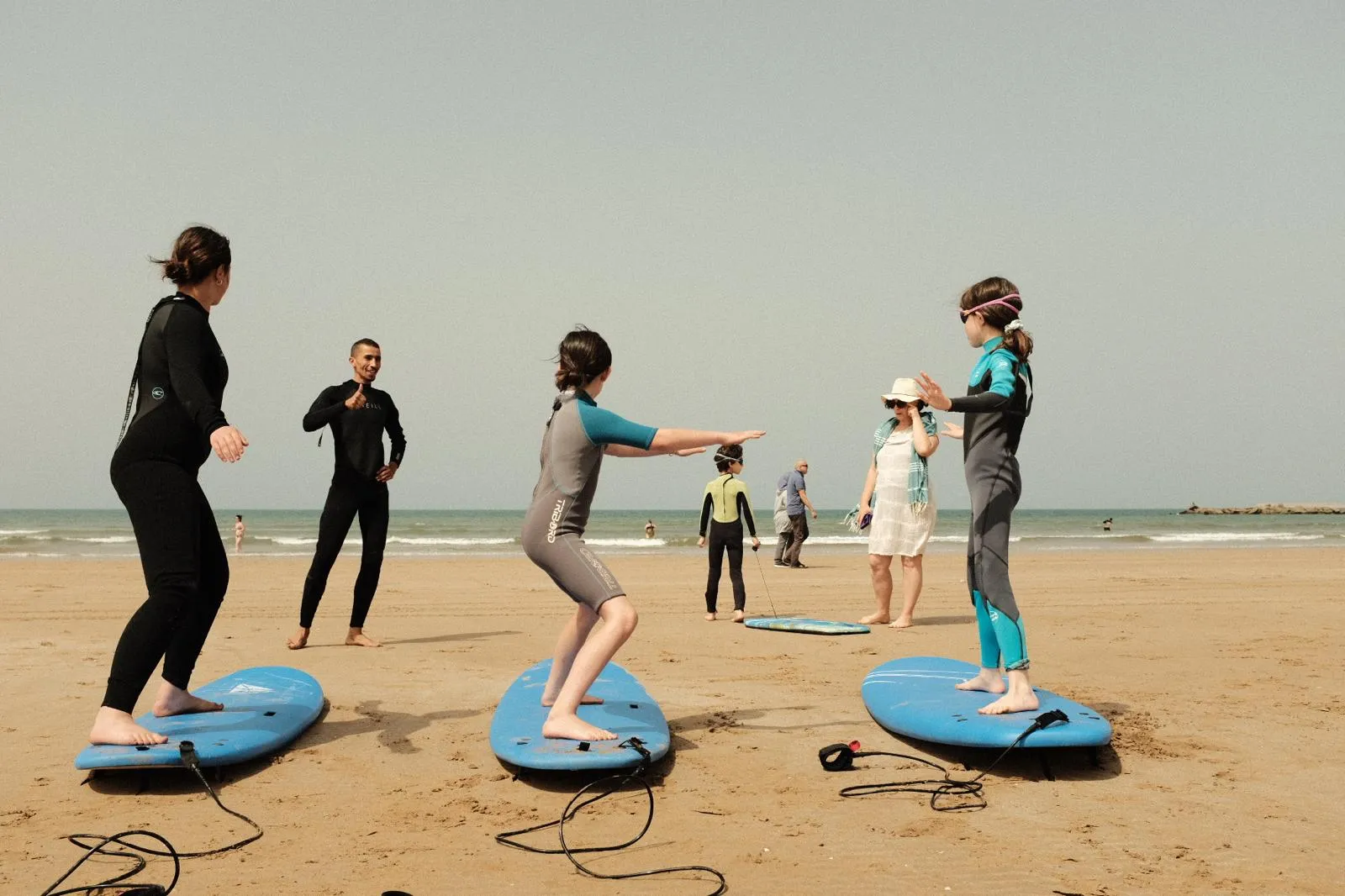
Beginners belong on the mid-beach sand sections at mid-to-high tide. Improvers graduate to the reef shoulder. Anchor Point and the heavier points stay off-limits for our beginner groups regardless of how good the photos look.
On big swell days — anything sustained over 2 m — we move first-timers to Agadir Beach and keep Anza for surfers who can handle the surge.
Getting there
From central Agadir to Anza
Anza is about five kilometres north of central Agadir — roughly 15 minutes by taxi or a 20-minute drive from the marina. Local taxis run from the city centre for a few euros; parking along the beach road fills early on weekends.
The beach has cafés, basic facilities, and a few rental stands along the promenade. Rental quality varies and boards are rarely sized to you — for coached lessons we bring boards matched to your height and weight. Planning the whole trip? See our getting to Agadir guide.
Anza questions
Anza beach — common questions
Tap a question — same answers we give on WhatsApp.
Is Anza beach good for beginners?
Anza works for beginners on the right tide and swell: soft sand sections in the middle of the beach produce gentle, crumbling waves that are ideal for first stand-ups. The reef section on the northern side is faster and better suited to surfers who already catch green waves. On bigger swell days we move first-timers to Agadir Beach.
What is the best tide at Anza?
Mid to high tide softens the waves and covers the reef, which is why we coach beginners at Anza on a rising or high tide. Low tide exposes the reef flank on the north side and speeds up the shoulder — a better window for confident intermediate surfers, and the point at which you most need to know where the rocks are.
What are the main hazards at Anza?
Sea urchins on the reef at the northern end when the tide drops, a strong current around the river mouth and harbour side on bigger days, and a busy lineup at the main peak on weekends. Swell wrapping around the headland can also surge quickly — check the forecast before paddling out without a coach.
How do I get to Anza from central Agadir?
Anza is about five kilometres north of central Agadir — roughly 15 minutes by taxi or a 20-minute drive from the marina. Local taxis run from the city centre for a few euros; there is parking along the beach road but it fills early on weekends. The beach is directly off the main Anza road with the harbour at the northern end.
When does Anza work best?
Anza is at its most consistent from October to March, when the Atlantic sends steady W/NW swell and the beach gets clean, coachable waves on many days. Wind matters more than swell size: an offshore morning with a modest 1 m swell beats a messy 2 m day. Early high-tide sessions are usually the cleanest.
Are there facilities and rentals at Anza?
Yes — the beach has cafés, a few small surf rental stands, and basic facilities along the promenade. Rentals are available but quality varies, and boards are rarely sized to you. For coached lessons we bring boards matched to your height and weight, which makes a real difference in your first week.
Can I surf Anza without a coach?
You can, and plenty of locals and visitors do. If you are not sure about the reef position, the current, or the etiquette at the main peak, the honest advice is to take one coached session first so you know where the safe take-off zone is. Surfing with a local who reads the tide daily saves you learning the hard way.
Surf Anza with a local
Book a lesson and skip the guesswork
Tell us your level and dates. We read the tide, pick the right part of Anza (or move to Agadir Beach when it suits you), and quote the exact price in writing.
€30 solo · Max 5 per coach · Agadir base
Sources & methodology
How this page was checked
Local break notes, lesson details, prices, group caps, operating dates, and guest totals are first-party information from Agadir Surf Club. Safety, destination, and travel facts are cross-checked against the official sources below.
Reviewed and materially updated . Conditions, transport, and entry rules can change; confirm live details before travelling or paddling out.
- Agadir–Taghazout beach and surf overview Moroccan National Tourist Office
- Surfing safety checklist Royal National Lifeboat Institution
- How swell height and period are defined US National Weather Service